
Noblesse Oblige
A Principle of Healthy Discourse

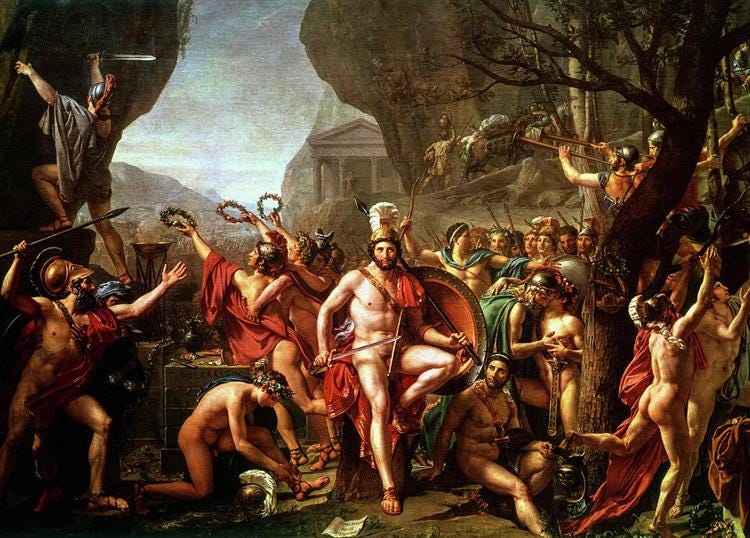
“Tis ours, the dignity they give to grace The first in valour, as the first in place; That when with wondering eyes our confidential bands Behold our deeds transcending our command Such, they may cry, deserve the sovereign state, Whom those that envy dare not imitate!” - Sarpedon to Glaucus, Homer, The Iliad.
L’Académie Française defines noblesse oblige as “whosoever claims to be noble must conduct himself nobly.” This is an apt definition, but the term has found other expressions throughout history, such as largesse and liberality. Its origin can be traced all the way back to pre-Socratic Greek literature. Homer underscores it well with Sarpedon's famous speech to his cousin Glaucus in the Iliad. This noble Lycian hero is exhorting his younger cousin that they are expected to act responsibly in kind with the great and noble station they were born to. Noblesse oblige can be reduced rather poignantly to a modern phrase we are all familiar with: with great power comes great responsibility.
In the many discussions and debates that we find ourselves in throughout our lives, there is a universal temptation when wrestling with ideas to fall to the level of character displayed by our opponents. A temptation to attack the man, but not the idea. We see this so often play out in today's political and public spheres. We see ad hominem attacks rather than syllogism. We slander and libel in equal measure rather than logical discourse. We often see public speeches bereft of critical thought that present merely what the clamoring masses and their sycophantic attendees would like to hear. We see leaders cater to the masses instead of leading the masses. Tragically, we see so few champions of truth using the art of rhetoric to convince and sway these masses away from tribalism towards some shared understanding that might unify and bind us together once again.
Ultimately, what is this old French term's place in the art of discourse? This is an especially pertinent question given that the nature of 'nobility' has evolved over the preceding centuries. There is something timeless in the archetypical concepts of nobility; these ideas and principles are ubiquitous throughout human history and our many myths and stories. I would posit, however, that we all contain the seeds of this noblesse or nobility. We can all act more or less nobly with each decision we make, and these decisions matter and have inherent value. To paraphrase a famous Spartan king, it is not noble positions that lend men distinction, but rather men that enhance those noble positions.
Our call to action is to bear this simple phrase in mind. Be kind to others and enter into discussion and debate to arrive at a more perfect truth for both parties. Give empathy freely and genuinely listen to opposing arguments and weigh their merits. Demur when that instinctual temptation arises to attack someone's character rather than contending with their words. If we are frustrated with the current state of human discussion, it is our sacred duty to do our part to elevate it.